
Zen Connect - Word Puzzle
Rally Games CoWord
4.643.00 Reviews
- Version
- 1.1.5
- Installs
- 50.00K
- Age Rating
- Everyone
Screenshots

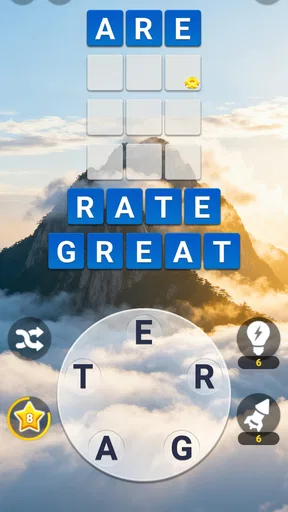
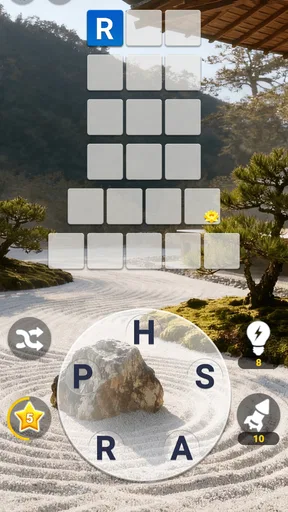
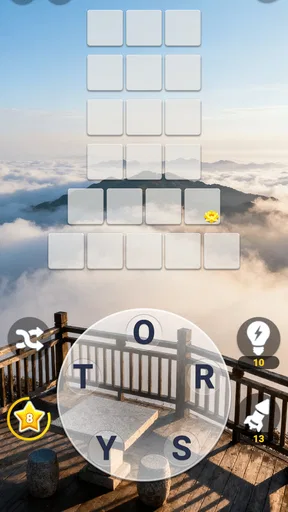
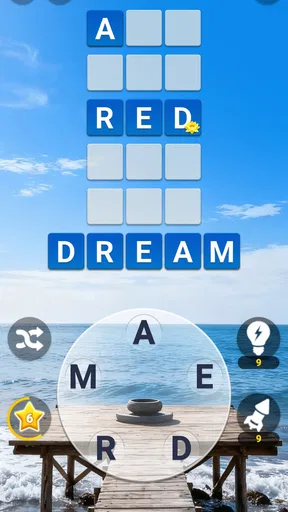
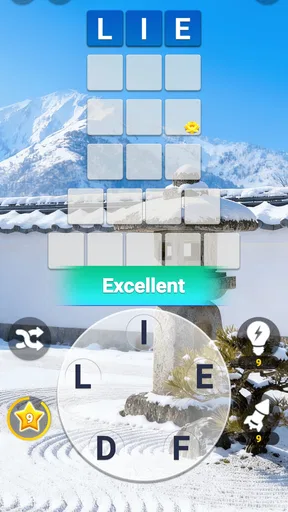
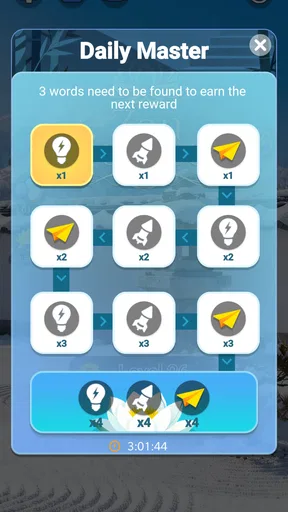
Our Review of Zen Connect - Word Puzzle
 Analysis by Appyee
I approached Zen Connect - Word Puzzle as a small, low-pressure word game rather than something designed to dominate my attention. That distinction matters. Its basic promise is to give you calm puzzles for short breaks, and in my experience the appeal comes from the quiet rhythm: open the game, look at the letters, make a few connections, and stop when your mind feels refreshed. It is a free word game from Rally Games Co, rated for Everyone, and it fits best into moments when I want light concentration without the urgency of a timed challenge.
The game has reached over 50 thousand installs and holds a 4.6 average from nearly 300 ratings, which suggests that its gentle approach is connecting with a reasonable audience. I would not read those figures as proof that it will suit every word-game fan, but they do make it easier to see this as an established casual option rather than an experiment with no audience. The current release is version 1.1.5, and the game is available on devices running Android 7.0 or later.
How Zen Connect feels during ordinary play
I find Zen Connect most useful when I treat it as a small pause rather than a game I need to master: I open a puzzle, give the word connections my attention, and stop when the break is over. That makes the ordinary rhythm feel intentional instead of endless. It also gives me a practical way to judge whether its gentle pace suits me before deciding how it compares with other word games.
A calm pace that suits short sessions
The first thing I noticed is that the concept does not ask me to prepare for a long session. I can use it while waiting for an appointment, taking a quiet break at work, or winding down before sleep. That makes the game more approachable than word titles built around streaks, countdowns, or competitive leaderboards. I do not have to protect a run or react instantly; I can spend a little time considering possible words and then put the phone away.
That slower pace also shapes my expectations about speed. A calm puzzle game does not need to feel frantic, and its best performance is not measured by how quickly it pushes me from one screen to the next. What I want is a prompt response when I tap, a board that remains easy to follow, and a session that does not feel burdened by unnecessary movement. Zen Connect works for that kind of use because the central activity is simple enough to understand without a lengthy learning period.
I would still separate perceived speed from puzzle difficulty. A puzzle can feel slow because I am stuck, not because the app is struggling. When I pause to test different word connections, that quiet gap is part of the experience. The game is most satisfying when I treat those pauses as thinking time instead of expecting the constant momentum of an arcade title.
What happens when I play for longer
Short sessions are the natural fit, but I also considered how the experience changes when I continue for a while. The main trade-off is mental rather than technical: a relaxing format can become repetitive if I am looking for increasingly complex challenges. Someone who enjoys finding patterns at a measured pace may appreciate that consistency. Someone who wants dramatic progression, rapid difficulty spikes, or a competitive reason to keep playing may find the same restraint limiting.
This is one of the useful ways to decide whether to install it. If I have ten spare minutes and want a word activity that does not demand full commitment, Zen Connect makes sense. If I have an evening free and want a deep campaign with a strong sense of story or a large collection of strategic systems, I would choose a different kind of game. Its strength is not variety for its own sake; it is the ability to turn a small amount of attention into a pleasant puzzle break.
I also prefer playing it when I am not trying to multitask heavily. A calm game is forgiving of interruptions, but solving words still requires a little focus. If I keep switching between messages and the puzzle, I lose the thread of possible connections and the experience becomes less satisfying. The practical tip is simple: give it a few uninterrupted minutes rather than opening it in the middle of a demanding task.
Resource expectations and device comfort
Because the game is built around word puzzles rather than visually intensive action, I would approach it as a modest everyday title. That makes it a sensible candidate for an older compatible phone or a device used mainly for basic apps. The minimum operating-system requirement is Android 7.0, so the audience is not restricted to only recent hardware. Still, compatibility is not the same as identical comfort on every device. Screen size, touch accuracy, and general responsiveness can affect how easy it is to inspect letters and make selections.
On a smaller display, the important question is not whether the game looks spectacular but whether the puzzle remains readable and comfortable to operate. I would recommend checking the layout during the first session and adjusting how I hold the phone before deciding whether the game suits me. A word puzzle can be technically usable yet tiring if I need to tap precisely or constantly reposition the device.
For battery and storage expectations, I would keep the same sensible perspective. A simple word-puzzle format is generally less demanding than a 3D game, but I would not promise a particular battery result without testing the title across different phones and settings. If I am trying to preserve battery during travel, I would play in shorter bursts and close other demanding apps first. That is not a special feature of Zen Connect; it is a practical habit that keeps any casual game feeling more responsive.
Stability, interruptions, and getting back into a session
Reliability matters more to me in a relaxation game than many people expect. If I open a puzzle during a short break, I do not want the return process to feel like work. Zen Connect is best judged by how naturally it fits those stop-and-start moments: begin when I have attention, pause when something else needs me, and return without turning a five-minute break into a technical task.
I would not confuse a simple format with a guarantee that every device will behave identically. Android phones differ in memory, background activity, screen dimensions, and system settings. If a session ever feels less responsive, my first steps would be to close unused apps, confirm that the phone has enough free space, and restart the game. Those are ordinary recovery actions, but they are particularly useful for a title intended for quick, repeat visits.
The current version, 1.1.5, gives me a clear point of reference when checking whether my installation is up to date. I would keep the game updated through the normal app-store process, especially if I depend on it as a regular wind-down activity. I also would not build my routine around an unsaved puzzle state until I had personally seen how the game behaves after leaving and reopening it. That is a small but important habit with any casual title: test the interruption pattern once, then you know whether it works for your own routine.
Where the game fits among word-puzzle alternatives
Zen Connect sits closer to a relaxing word exercise than to a traditional competitive word app. Compared with a crossword-focused game, it may appeal more to someone who likes forming connections without committing to a full clue grid. Compared with a spelling game built around speed, it is a better match for players who dislike timers and pressure. Compared with a daily word challenge, it offers a different kind of appeal: the point is not necessarily to protect a daily ritual or compare one result with friends, but to enjoy a quiet puzzle whenever the mood arrives.
That comparison also reveals its limits. Players who want a dictionary-heavy challenge, a strong social layer, or a visible long-term progression system should look carefully before choosing it. The store summary emphasizes calm word puzzles, and that is the right lens. I would not install it expecting a competitive event, a narrative adventure, or a substitute for a serious vocabulary-training program.
One non-obvious advantage of this positioning is emotional accessibility. When I am tired, I often avoid games that make failure feel public or costly. A quieter word title gives me room to experiment and stop without feeling that I have wasted a carefully maintained streak. The trade-off is that the absence of pressure can reduce motivation for players who rely on goals and competition to keep returning.
Who will enjoy it most
I think the strongest audience is people who want a small mental reset. It can work for a commuter with a few minutes between stops, a student taking a break from reading, or anyone who likes wordplay but does not want to sit through a complicated tutorial. It is also a reasonable choice for households looking for an Everyone-rated game that is easy to understand and does not present itself as an intense action experience.
Another useful scenario is using it as a transition between activities. I might play a brief round after finishing work, not because I want to lose an hour, but because a contained puzzle helps me shift attention. The trick is to treat it as a deliberate pause. If I open it automatically every time I feel bored, its calm quality may turn into background habit rather than a meaningful break.
I would skip it if my main reason for playing word games is competition. I would also be cautious if I need a title with clearly defined educational exercises, extensive vocabulary explanations, or a robust offline routine that I have already confirmed for my particular device. Those are different priorities. Zen Connect is more convincing as a gentle pastime than as a complete language-learning tool.
Free access and the cost decision
The game is free to download, which makes trying it relatively straightforward. That is useful here because the right question is personal: do the puzzle rhythm and level of challenge fit the way I actually take breaks? I would spend a few short sessions with it before considering any optional purchase, rather than assuming that paying will change the basic experience in a way I need.
In-app purchases are listed at $5.99 per item. For me, that makes the purchase decision worth slowing down over. A single item may feel reasonable if it removes a specific annoyance or adds something I genuinely use, but I would not buy simply because I had already invested time. The best approach is to evaluate the free experience on its own terms and treat every optional item as a separate decision.
This matters especially for a relaxing game. The value is not only the amount of content I can access; it is whether the game leaves me feeling calmer rather than nudging me into spending. I would check the purchase prompt carefully, consider whether it supports my preferred way of playing, and keep the game free if the extras do not solve a real problem for me.
Small habits that improve the experience
My first tip is to use the game as a focused break instead of a constant companion. Put the phone down between puzzles, notice whether the session actually refreshed you, and avoid turning a calm design into another endless scroll. This makes the game more useful for people who want mental space rather than another source of stimulation.
My second tip is to change the setting around the game. A quiet room and a few uninterrupted minutes make word connections easier to enjoy than playing while several notifications compete for attention. If I am stuck, I would step away briefly instead of tapping randomly. Returning with a fresh look is often more satisfying than forcing the answer.
My third tip is to judge the interface with your hands, not only your eyes. Word games depend on repeated tapping, so a comfortable grip and a clean screen can make a bigger difference than expected. On a compact phone, I would try both one-handed and two-handed use during the first session. If the controls feel cramped, that is a genuine reason to choose a larger-screen alternative, even if the game itself is appealing.
A fourth consideration is device maintenance. Since the game is meant for casual repeat visits, I would avoid testing it for the first time when my phone is already overloaded with background tasks or nearly full storage. That gives me a fairer impression of its responsiveness and makes it easier to distinguish a device problem from a game problem.
My overall performance verdict
Zen Connect succeeds when I ask it to be a calm, accessible word puzzle and judge it by that standard. Its modest format makes it suitable for short sessions, older compatible Android devices, and players who prefer thinking time over pressure. The free entry point lowers the risk of trying it, while the Everyone rating broadens its everyday appeal. Rally Games Co has positioned it in a part of the word category where simplicity can be a real strength.
My reservations are equally clear. A peaceful rhythm will not satisfy players seeking deep progression, competition, or a demanding vocabulary challenge. The $5.99-per-item purchases also deserve a deliberate look before spending, particularly if the free game already provides the kind of break you wanted. And while the Android 7.0 requirement is approachable, comfort still depends on the phone’s screen and touch experience.
For me, Zen Connect - Word Puzzle is worth recommending to a friend who wants a gentle way to occupy a few quiet minutes. I would describe it as a reliable candidate for relaxed wordplay, not as an all-purpose game for every mood. If you enjoy unhurried puzzles and want something that can fit between real-life tasks, it is a sensible free download. If you need rivalry, elaborate systems, or a clear long-term challenge, I would point you toward a more specialized alternative instead.
Verdict
Strengths of Zen Connect - Word Puzzle
- Relaxing gameplay suited to short, casual sessions.
- Word challenges gradually increase in difficulty.
- Clean visuals keep the board easy to read.
- Helpful hints can assist when you get stuck.
- Works well for players who enjoy vocabulary practice.
Limitations of Zen Connect - Word Puzzle
- Some puzzles may feel repetitive after extended play.
- Hints or extra assistance may be limited without rewards.
- The calm pace may not satisfy players seeking fast action.
- Difficulty can vary noticeably between individual puzzles.
- Requires a stable connection for some features or content.
Similar Picks in This Category
View All
Word Search - Word Puzzle Game
Bluetile4.8

Word Search Quest - Puzzles
Blackout Lab4.8

CodyCross: Crossword Puzzles
Fanatee, Inc.4.7

Words of Wonders: Crossword
Fugo Games4.9

Wordscapes: Word puzzle game
PeopleFun4.7

Word Search Explorer
PlaySimple Games4.9
Frequently Asked Questions
What is Zen Connect - Word Puzzle, and how is the game played?
Zen Connect - Word Puzzle is a relaxing word game that combines vocabulary challenges with a simple connect-style mechanic. You generally link letters or word-related elements to form valid words and complete each level. The early stages are designed to be easy to understand, while later puzzles gradually require more observation, planning, and a broader vocabulary.
Is Zen Connect - Word Puzzle suitable for beginners and casual players?
Yes. The game is aimed at casual players and does not require previous experience with word puzzles. Its straightforward controls and gradually increasing difficulty make it accessible to beginners, while the later levels can still provide a satisfying challenge for experienced puzzle fans. It is also suitable for short sessions when you want something calm rather than fast-paced.
Can I play Zen Connect - Word Puzzle without an internet connection?
Offline availability can depend on the version of the app and the feature you are using. Core puzzle levels may be playable without a constant connection, but advertisements, cloud synchronization, updates, rewards, or other online services may require internet access. It is best to open the game once while connected and check which functions remain available in airplane mode.
Does Zen Connect - Word Puzzle contain advertisements or in-app purchases?
The game may use advertising and optional in-app purchases, as is common with free-to-download mobile puzzle games. Ads can potentially appear between levels or when you choose bonus rewards, while purchases may offer hints, remove advertising, or provide other convenience features. Before downloading, review the current store listing and your device’s purchase controls, since monetization can change with updates.
What should I know about privacy, permissions, and device compatibility before downloading?
Before installing Zen Connect - Word Puzzle, check its Google Play or App Store listing for the latest supported operating-system requirements, file size, age rating, and privacy information. Puzzle games usually need relatively modest hardware, but analytics, advertising, notifications, or account features may involve additional permissions or data collection. Review the developer’s privacy policy and only grant permissions that you are comfortable using.
Play our best games!


